SaaS SEO Guide 2026: Strategy, Tools and AI Visibility Wins

Paid ads rent you customers. SaaS SEO lets you own the channel.
But 2026 search isn't ten blue links anymore. Buyers ask AI Overviews, AI Mode, ChatGPT and Perplexity before they ever reach your pricing page.
So the playbook changed.
Good SaaS SEO now means two jobs. Rank for the bottom of funnel searches that drive trials and demos. And get cited when AI tools answer buyer questions.
We'll walk you through the full SEO strategy we use, step by step. Keyword research in Semrush and Ahrefs, technical fixes, product led content, AI visibility, links and the metrics that prove revenue.
Bottom Line Upfront on SaaS SEO
SaaS SEO vs Classic SEO vs GEO in 2026
SaaS SEO borrows from classic SEO. Then it adds product pages, long buying cycles and a new layer called GEO, or generative engine optimization.
| Factor | Classic Content SEO | SaaS SEO | GEO and AI Search |
|---|---|---|---|
| Main goal | Traffic and ad or affiliate revenue | Trials, demos and paid accounts | Brand mentions and citations in AI answers |
| Best keywords | High volume informational | High intent, often low volume | Questions and long prompts |
| Key pages | Blog posts | Comparison, alternatives, integration, use case, pricing pages | Clear, quotable answers and data |
| Conversion path | Single visit | Several visits, several people | AI answer, then branded search or direct visit |
| Success metric | Sessions | Signups, pipeline, MRR | Mentions, citations, share of voice |
| Main tools | Keyword and rank tools | Semrush or Ahrefs plus GA4 and CRM | Semrush AI Visibility, Ahrefs Brand Radar, Bing AI Performance |
Here's our honest take. GEO isn't a replacement for SEO. It's built on top of it.
If Google can't crawl and index your pages, no AI feature built on Google Search can cite them either.
SaaS Content Mapped to the Buyer Funnel
Most SaaS blogs begin with top of funnel posts. Thousands of visits. Zero signups.
We flip that. Bottom of funnel first, then work upward.
| Funnel Stage | Page Type | Example Query | Typical Goal |
|---|---|---|---|
| Bottom | Alternatives pages | “[competitor] alternatives” | Trial or demo |
| Bottom | Comparison pages | “[your tool] vs [competitor]” | Trial or demo |
| Bottom | Pricing and plan pages | “[your tool] pricing” | Plan selection |
| Bottom | Integration pages | “[app] integration with [app]” | Signup from an existing workflow |
| Middle | Use case and industry pages | “invoicing software for freelancers” | Trial |
| Middle | Best of roundups | “best email tools for startups” | Placement on buyer short picks |
| Middle | Templates and free tools | “SaaS pricing calculator” | Email capture, product taste |
| Top | How to guides and glossary | “how to reduce churn” | Awareness, links, AI citations |
Operator Flag: A keyword with 90 searches a month and buyer intent beats one with 9,000 and student intent. We've watched tiny comparison pages outsell entire blog categories.
Step by Step SaaS SEO Plan for Organic Customer Acquisition
Here's the order we follow. Keep each step tight, then repeat the loop.
Step 1. Define Your ICP and Their Search Language
- Write down who buys, who uses and who approves.
- Pull exact phrases from sales calls, support tickets and G2 or Capterra reviews.
- Note the problems they search for before they know your category exists.
Step 2. Build Your Keyword Map in Semrush or Ahrefs
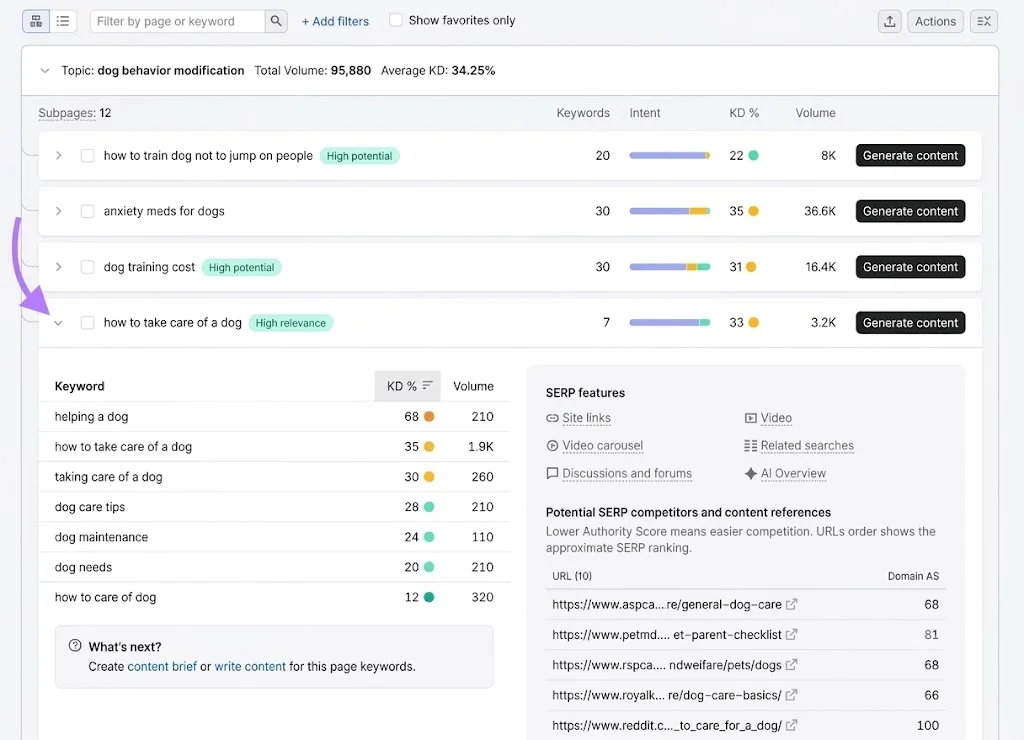
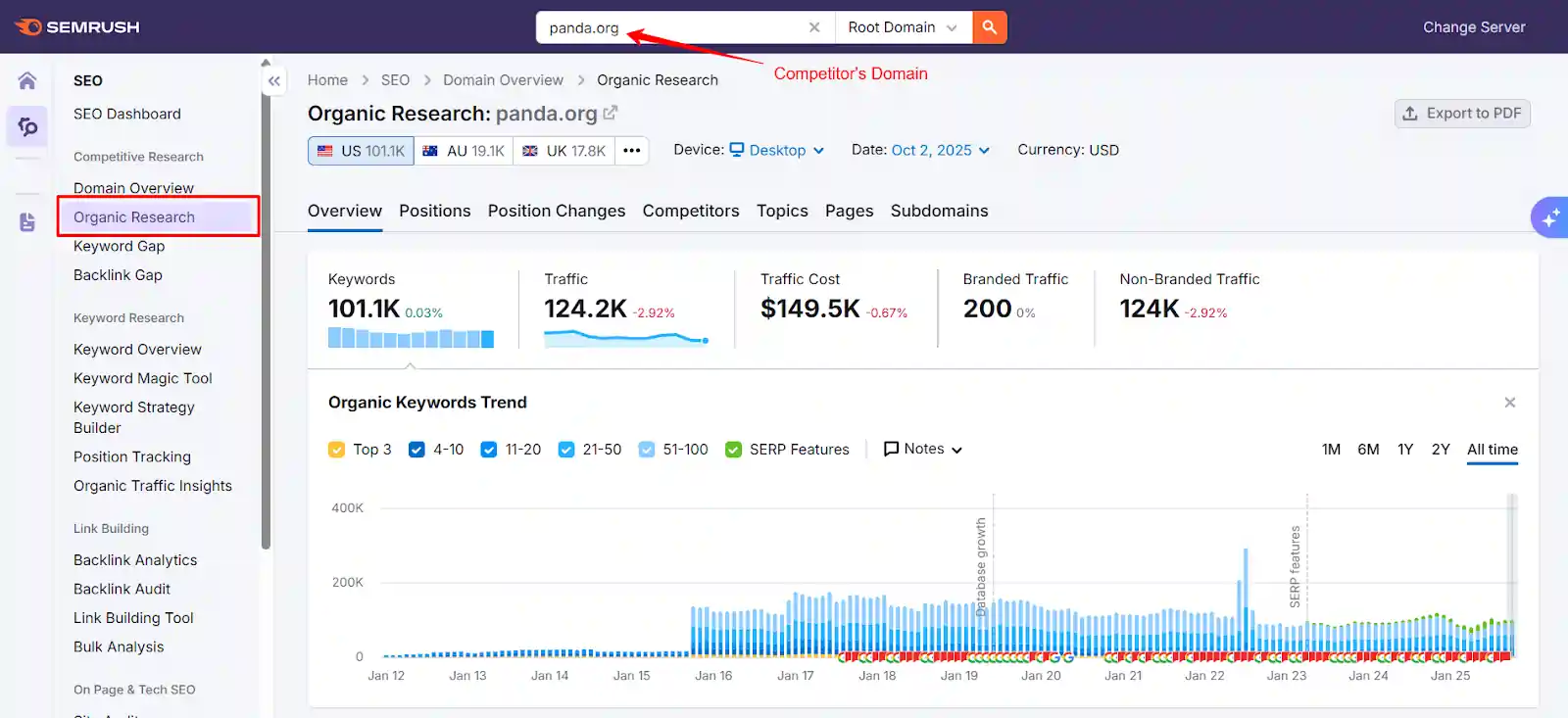
- Pull competitor keywords with Semrush Organic Research or Ahrefs Site Explorer.
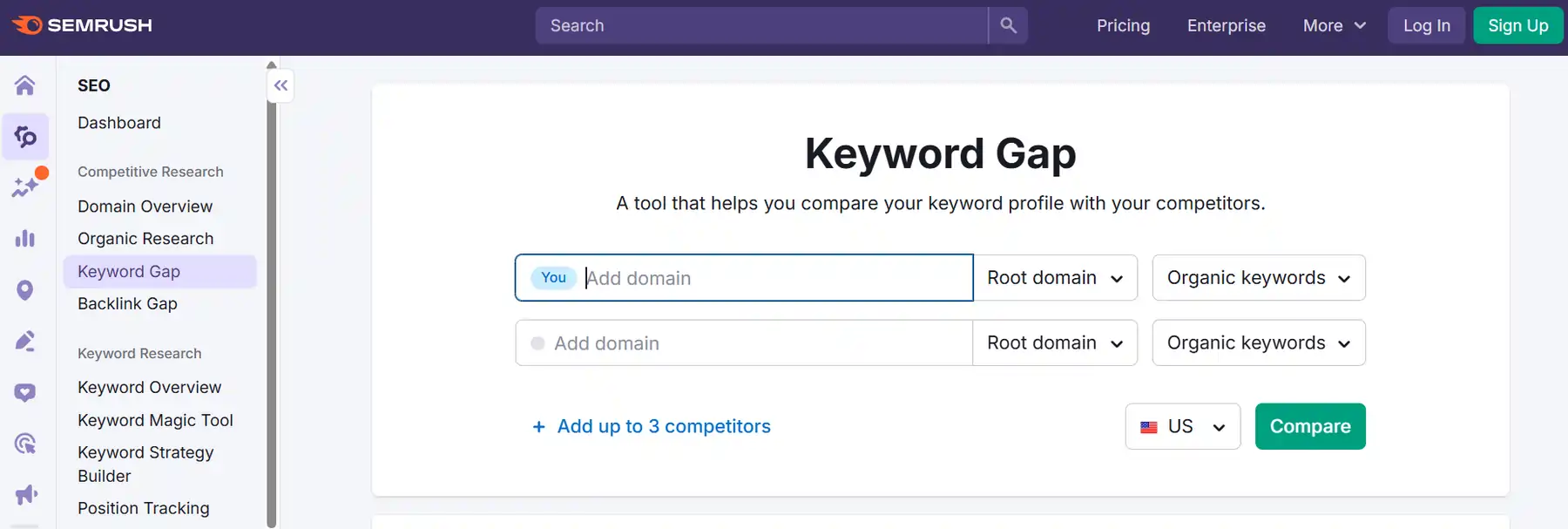
- Find gaps with Semrush Keyword Gap or Ahrefs Competitive Analysis.
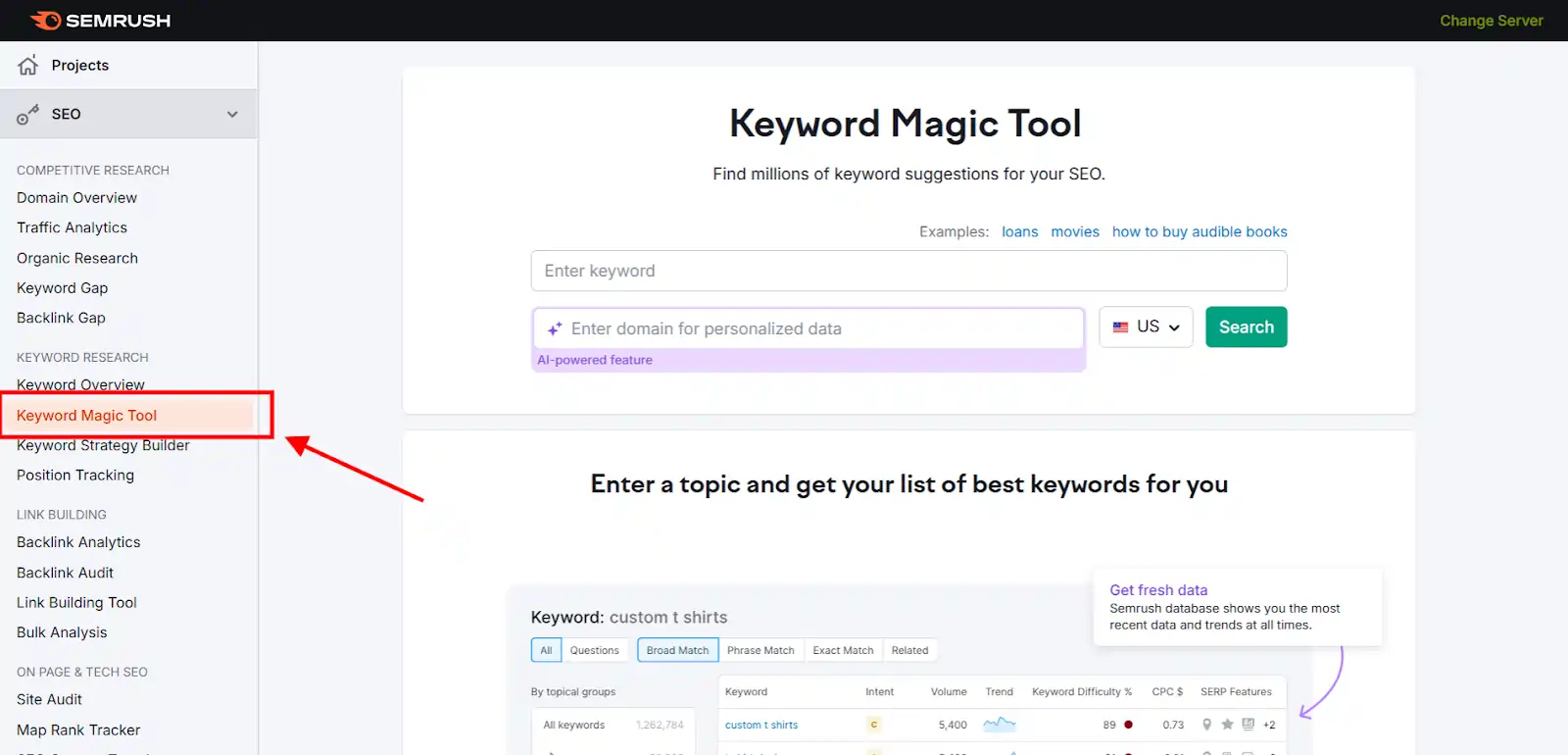
- Expand seeds with Semrush Keyword Magic Tool or Ahrefs Keywords Explorer.
- Tag every keyword by funnel stage and page type.
Step 3. Prioritize by Business Value, Not Volume
- Score each keyword on intent, product fit and difficulty.
- Ship comparison, alternatives and integration pages first.
- Park top of funnel ideas until money pages exist.
Step 4. Fix the Technical Foundation
- Keep marketing pages crawlable and fast. Block or noindex logged in app screens.
- Verify the site in Google Search Console and Bing Webmaster Tools.
- Audit with Semrush Site Audit or Ahrefs Site Audit.
Step 5. Publish Product Led Content
- Show the product solving the problem with real screenshots and workflows.
- Answer the core question in the first few lines of each section.
- Add honest comparison tables. Buyers and AI tools both love them.
Step 6. Connect Pages With Topic Clusters
- Link guides to use case pages, and use case pages to signup or pricing.
- Use descriptive anchor text, not “click here.”
- Make sure no money page sits orphaned.
Step 7. Earn Links and Brand Mentions
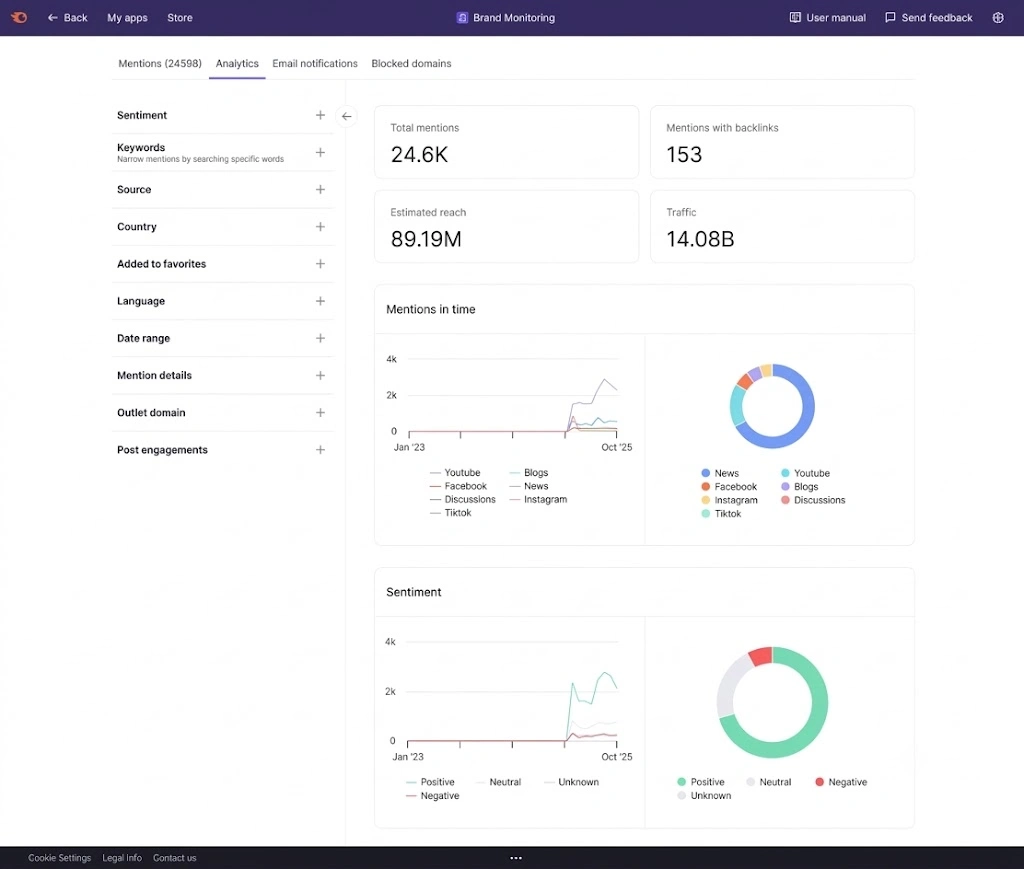
- Publish original data, free tools and integration partner content.
- Get included on review sites and roundups buyers actually read.
- Track unlinked mentions and turn them into links.
Step 8. Measure Revenue, Then Refresh
- Track organic signups and trials by landing page in GA4 and your CRM.
- Track AI mentions and citations in Semrush, Ahrefs or Bing Webmaster Tools.
- Refresh decaying pages before building new ones.
That's the loop. Now let's break each piece down properly.
SaaS Keyword Research With Semrush and Ahrefs
Keyword research for SaaS is mostly competitor research. Your rivals already showed you what converts.
Mining Competitor Keywords
Finding Content Gaps
Expanding Into Questions and Prompts
| SEO Task | Semrush Tool | Ahrefs Tool |
|---|---|---|
| Competitor keywords | Organic Research | Site Explorer |
| Keyword gaps | Keyword Gap | Competitive Analysis |
| Keyword expansion | Keyword Magic Tool | Keywords Explorer |
| Rank tracking | Position Tracking | Rank Tracker |
| Technical audit | Site Audit, with AI Search Health widget | Site Audit |
| Backlink research | Backlink Analytics, Backlink Gap | Site Explorer backlinks reports |
| AI visibility | AI Visibility Toolkit | Brand Radar AI |
| Prompt tracking | Prompt Tracking in Position Tracking | Custom Prompts in Brand Radar |
| AI assistant access | Semrush MCP | Ahrefs MCP |
Semrush Coupon: Free 14-Day Pro Trial for SaaS SEO
Claim Semrush's free 14-day Pro Trial to find high-CPC keywords, analyze rivals, and uncover profitable SaaS SEO opportunities.
Search Intent Checks Before You Write a Single Word
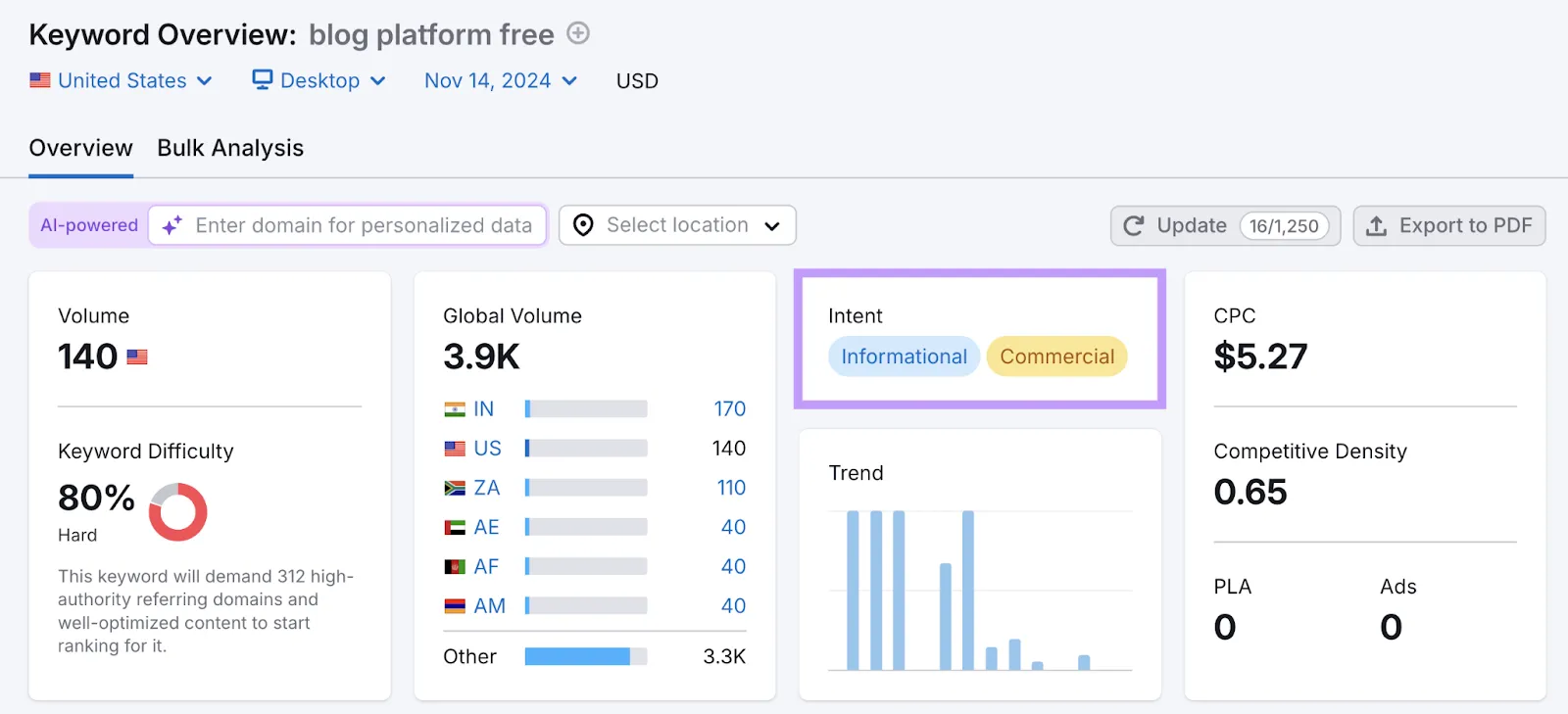
Tools guess intent. The results page tells the truth.
On Page SEO Rules for SaaS Money Pages
- Title tags: Lead with the keyword and a clear benefit. Keep brand names short.
- One clear H1: Match the search intent, not your internal feature name.
- Clean URLs: Short slugs like /alternatives/competitor-name/.
- Meta descriptions: Sell the click with a specific promise.
- Author and company signal: Show who wrote the page and why they know the topic. Google's helpful content guidance asks who created content, how and why.
- Visible update dates on comparison and pricing pages, so readers trust the facts.
- Strong CTAs: Trial, demo or template download, matched to the page's funnel stage.
Semrush vs Ahrefs for SaaS SEO in 2026
Both tools are excellent. Both changed a lot in 2026.
Adobe completed its acquisition of Semrush, and Semrush reshaped its plans around AI visibility. Ahrefs pushed Brand Radar and added AI prompt checks to every plan.
| Factor | Semrush | Ahrefs |
|---|---|---|
| Entry price | SEO plan from $139/mo | Lite $129/mo, Starter $29/mo for light research |
| Mid tiers | Semrush One Starter $199/mo, Pro+ $299/mo | Standard $249/mo, Advanced $449/mo |
| Top tier | Advanced and Enterprise, higher tiers or quote | Enterprise $1,499/mo, annual only |
| Annual discount | Up to 17% | Up to 17% on annual billing |
| AI visibility | AI Visibility Toolkit, $99/mo per domain add-on, or bundled in Semrush One | Brand Radar AI from $199/mo, AI prompt checks included on all plans |
| AI platforms tracked | ChatGPT Search, Google AI Mode, Gemini for prompt tracking | AI Overviews, AI Mode, ChatGPT, Perplexity, Gemini, Copilot, plus Claude for custom prompts |
| Extra users | Paid seats per user | $40 to $100 per user depending on plan |
| Free option | Free account with limits, 7 day trial on paid plans | Ahrefs Free for your own site, many free tools |
| Best for | All in one marketing teams, PPC plus SEO | Link data, content gaps and AI share of voice |
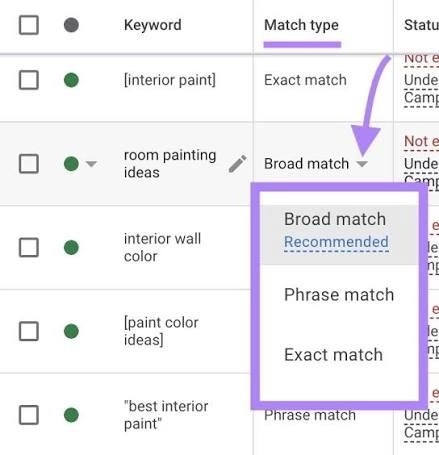
Where Semrush Shines for SaaS Teams
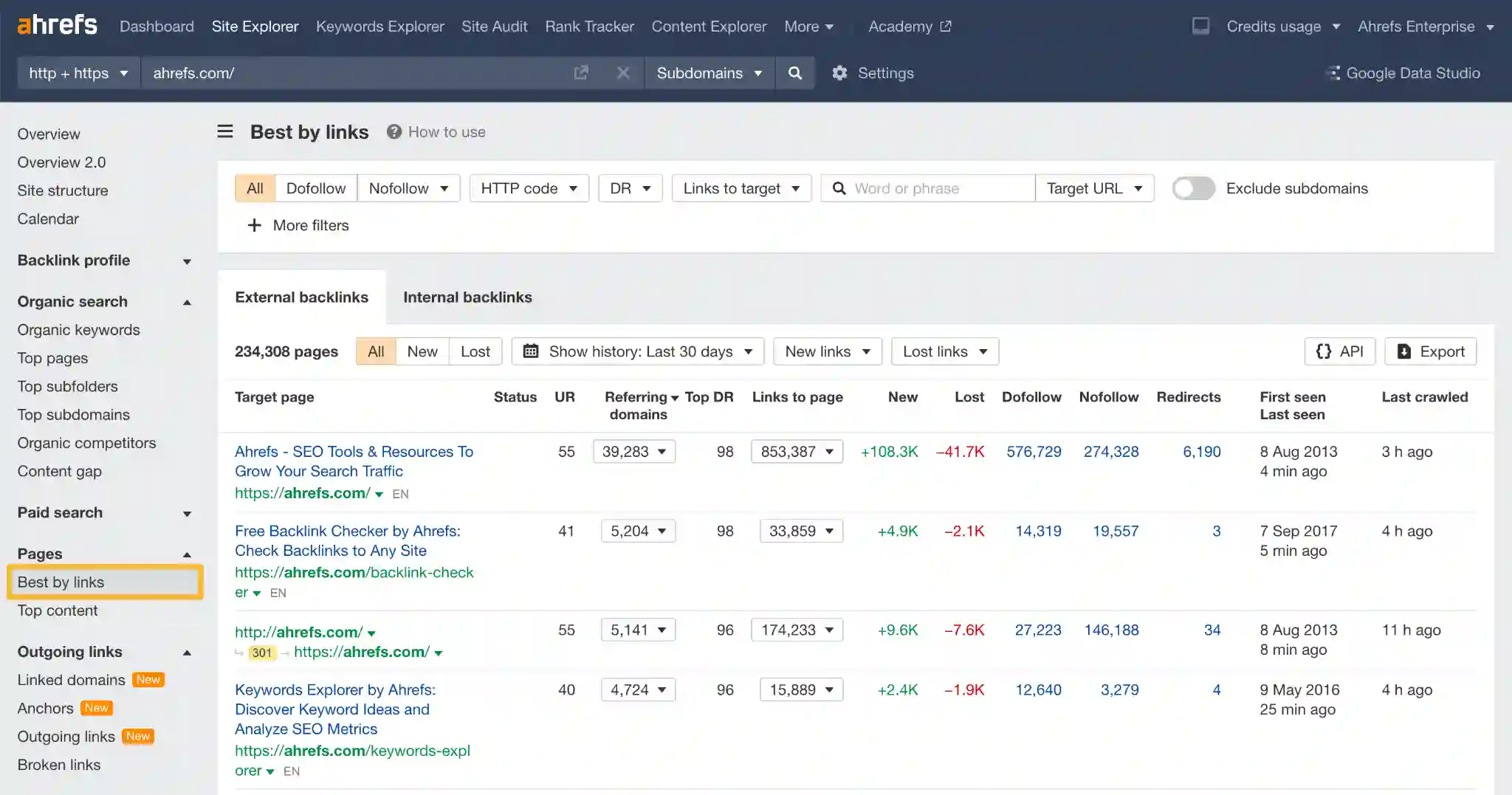
Where Ahrefs Shines for SaaS Teams
Technical SaaS SEO That Keeps Money Pages Crawlable
SaaS sites break in special ways. App subdomains, JavaScript heavy builds, docs portals and endless integration pages.
| Technical Area | What Goes Wrong | What We Do |
|---|---|---|
| App vs marketing site | Logged in app pages leak into the index | Keep app on its own subdomain, noindex or block what shouldn't rank |
| JavaScript rendering | Content appears only after scripts execute | Server side rendering or static generation for marketing pages |
| Important text in images | Crawlers and AI can't read it | Keep key content in text, support it with images and video |
| Docs and help center | Thin, duplicate or versioned pages | Canonical to the current version, link docs to product pages |
| Integration pages | Hundreds of near identical pages | Unique use cases and setup steps per integration |
| Page experience | Slow interactions on heavy pages | Watch Core Web Vitals, including INP, in Search Console |
| Structured data | Markup that doesn't match the page | Keep schema aligned with visible text |
| Robots and CDN rules | Firewalls block search or AI crawlers | Check robots.txt and CDN bot settings together |
Indexing Hygiene for SaaS Sites
Google's own AI features guidance repeats the same basics. Allow crawling, use internal links, offer good page experience, keep important content in text, and match structured data to visible content.
Schema Markup for SaaS Websites
The golden rule from Google's AI features guidance applies here. Structured data must match the visible page text.
Product Led Content That Converts Searchers Into Users
Product led content shows your tool doing the job. Not a generic article with a CTA glued to the end.
Comparison and Alternatives Pages
Integration and Use Case Pages
Free Tools and Templates
Programmatic SEO Without the Spam Risk
Programmatic pages can scale integration, template or location pages fast. They can also trip Google's scaled content abuse policy.
SEO for New SaaS Categories With Little Search Volume
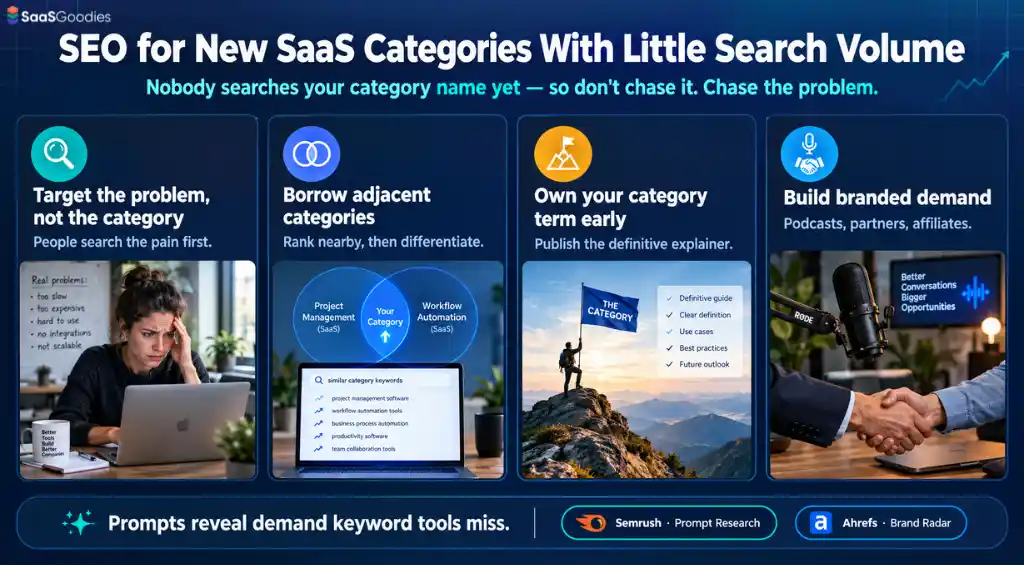
Built something new? Then nobody searches for your category name yet. That's normal.
Semrush Prompt Research and Ahrefs Brand Radar help here. Prompts often show demand that classic keyword tools miss.
Docs, Help Center and Changelog as SEO Assets
Your docs answer exactly the questions buyers ask late in the journey. “Does it integrate with X?” “Can it do Y?”
International SaaS SEO and Localized Pages
Review Sites, Communities and Video in SaaS Search
Many “best” and “alternatives” results are owned by review sites and communities. Join them instead of fighting them.
These third party pages feed both Google results and AI answers. Being there counts twice.
Quick Wins for Your First Few Months of SaaS SEO
None of these need a big budget. All of them target buyers, not browsers.
GEO for SaaS and How to Get Cited in AI Answers
Buyers now ask AI tools things like “best CRM for a five person agency.” If your brand isn't in the answer, you're out of the deal before it starts.
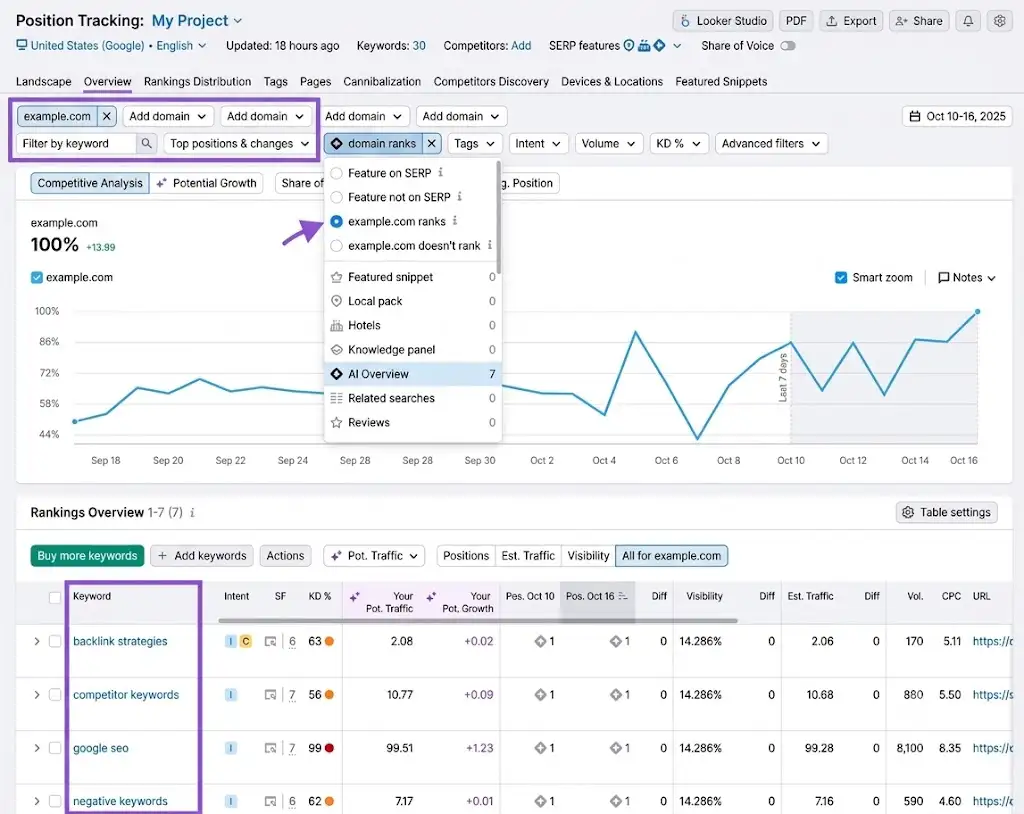
What Google Says About AI Overviews and AI Mode
Getting Into ChatGPT Search
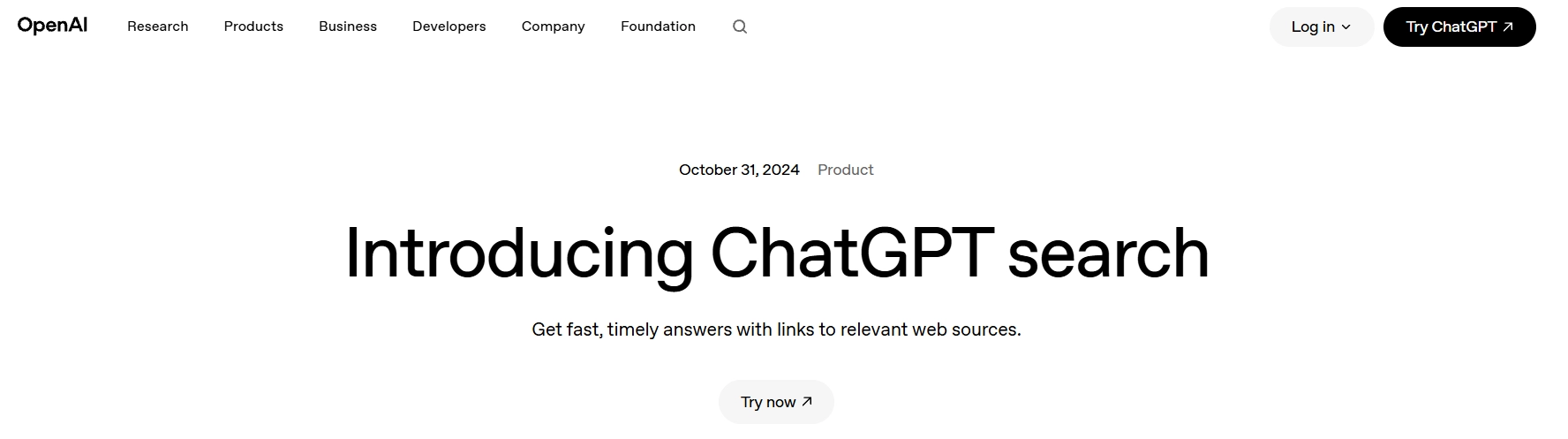
Each setting is independent. Robots.txt changes can take about 24 hours to affect ChatGPT search results.
Bing and Copilot Citations
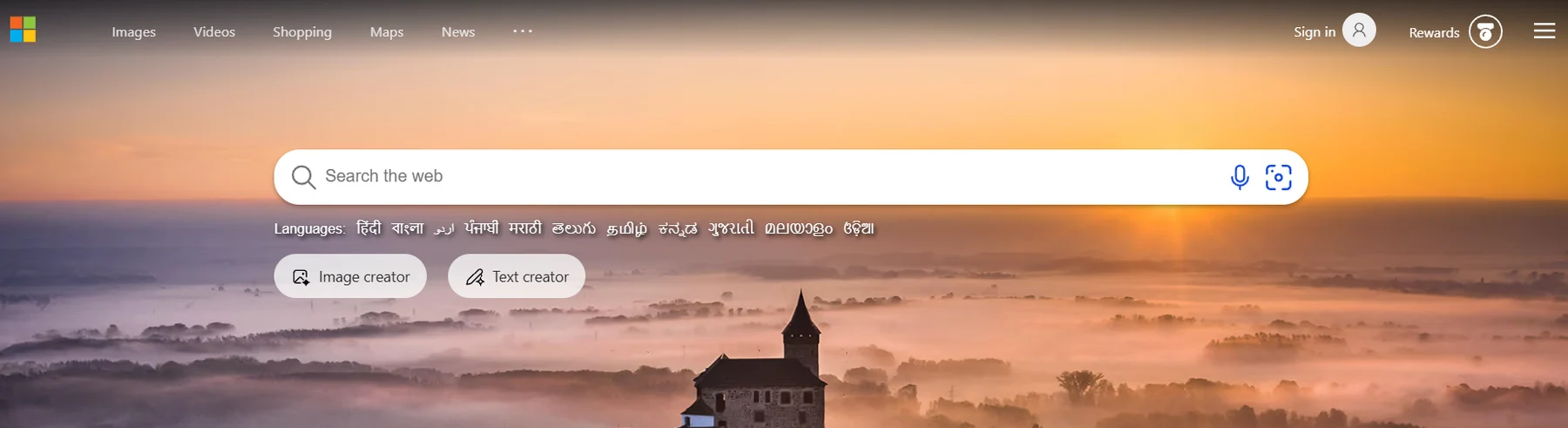
Bing Webmaster Tools now has an AI Performance report in public preview.
It shows citations, not clicks. Still, it's the clearest first party AI citation data we have outside Google.
Content Habits That Earn AI Citations
The llms.txt Question
Here's an honest wrinkle. Semrush Site Audit can flag a missing llms.txt file as an AI readiness issue.
Google, meanwhile, says you don't need AI text files for its AI features. We treat llms.txt as optional and low priority. Crawlability, content quality and mentions matter far more.
| AI Surface | How to Stay Eligible | Where to Measure |
|---|---|---|
| Google AI Overviews | Indexed, snippet eligible, helpful pages | Search Console Web search type, Ahrefs Brand Radar |
| Google AI Mode | Same as above, plus coverage of related subtopics | Semrush Prompt Tracking, Ahrefs Brand Radar |
| ChatGPT search | Allow OAI-SearchBot and its published IP ranges | Semrush Prompt Tracking, Ahrefs Brand Radar, referral traffic in GA4 |
| Gemini | Strong Google Search presence | Semrush Prompt Tracking, Ahrefs Brand Radar |
| Microsoft Copilot | Bing indexing, Bing Webmaster Tools verified | Bing AI Performance report, Ahrefs Brand Radar |
| Perplexity | Crawlable pages, strong third party mentions | Ahrefs Brand Radar, GA4 referrals |
Internal Linking Patterns That Push Authority to Money Pages
Your blog earns links. Your money pages earn revenue. Internal links move authority from one to the other.
Internal links also help AI features. Google's guidance specifically says to make content findable through internal links.
Content Briefs That Produce Better SaaS Pages
Bad briefs make bad pages. A good brief takes twenty minutes and saves hours of rewrites.
Hand the same brief to a writer or an AI draft tool. The output quality jumps either way.
Link Building and Digital PR for SaaS Brands
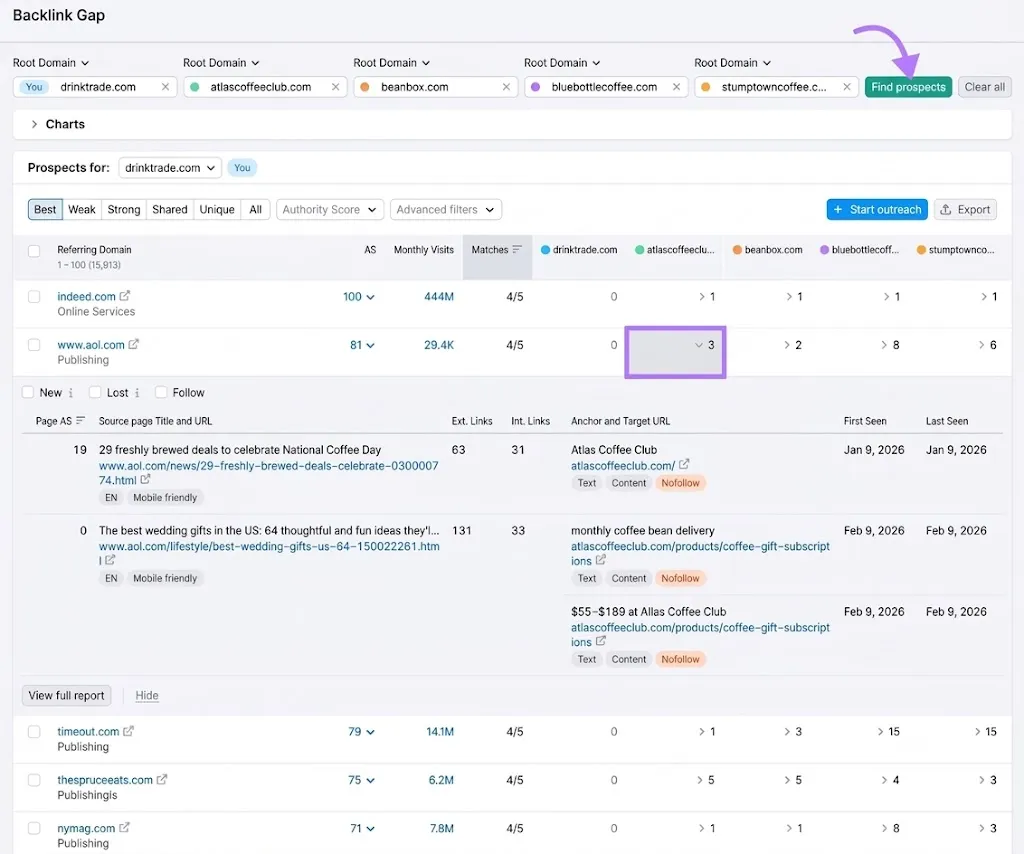
Links still matter. In AI search, mentions matter too.
| Tactic | Effort | Link Quality | AI Mention Value |
|---|---|---|---|
| Original data studies | High | High | High, data gets quoted |
| Free tools and calculators | Medium to high | High, links build over time | Medium |
| Integration partner pages | Low to medium | Medium to high | High, tied to workflows |
| Review site profiles | Low | Medium | High, often cited in AI answers |
| Roundup inclusion outreach | Medium | Medium to high | High for “best X” prompts |
| Founder expert quotes | Medium | Medium to high | Medium |
| Affiliate program | Medium | Varies, often nofollow or sponsored | High, affiliates publish reviews and comparisons |
Why We Push SaaS Affiliate Programs
This is our home turf. Affiliates write the reviews, coupons and comparisons buyers read before purchase.
Link stats and benchmarks live in our link building statistics roundup.
Measuring SaaS SEO by Signups, Not Sessions
Traffic graphs feel good. Revenue pays salaries.
| Metric | Where to Track | Why It Matters |
|---|---|---|
| Organic signups and trials | GA4 key events, product analytics | Direct proof SEO drives product usage |
| Demo requests from organic | CRM with source fields | Pipeline for sales led SaaS |
| Trial to paid rate from organic | Billing plus CRM | Shows lead quality, not just quantity |
| Revenue by landing page | CRM attribution | Tells you which pages to build more of |
| Non brand clicks | Search Console | Growth beyond people who already know you |
| Branded search growth | Search Console | Often rises when AI answers mention you |
| AI mentions and citations | Semrush, Ahrefs, Bing AI Performance | Presence in AI answers |
| AI share of voice | Semrush Brand Performance, Ahrefs Brand Radar | Your share vs competitors in AI responses |
Attribution Habits That Keep You Honest
Content Refresh and Decay for SaaS Pages
SaaS content rots fast. Features ship, prices change, competitors pivot.
We refresh money pages far more often than blog posts. One outdated price on a comparison page can cost more than a dozen missing blog posts.
SaaS SEO Timelines and Team Setup
SEO isn't instant. Set expectations honestly with founders and investors.
Who Owns What
Using AI Writing Tools Responsibly
Curious how teams use AI tools? See our Claude AI statistics and AI SaaS statistics posts.
In House SEO vs Agency for SaaS Companies
SaaS SEO Questions Founders Ask
Should a New SaaS Start SEO Before Product Market Fit?
Start the technical basics and a few bottom of funnel pages early. Save heavy content investment until positioning is stable.
Is GEO a Separate Strategy?
Not really. It's SEO plus brand mentions plus clear, quotable content. Google itself says no special optimization is needed for its AI features.
How Long Until SaaS SEO Brings Signups?
It depends on domain strength, competition and how much you publish. Bottom of funnel pages on an established domain usually pay off sooner than blog posts on a brand new one.
Blog on a Subdomain or a Subfolder?
Both can rank. We prefer a subfolder like /blog/, so content, product pages and internal links live on one site.
Should We Gate Content Behind Forms?
Gated pages can't rank or be cited if crawlers can't read them. Keep the useful part public, then gate the extra template or report.
Can AI Visibility Scores Prove SEO ROI?
Not on their own. Visibility scores come from sampled prompts, and they don't map directly to traffic or revenue. Pair AI scores with branded search growth, organic signups and “how did you hear about us” answers from new users.
What Should a Small SaaS Team Do First?
Fix indexing, publish three to five comparison or alternatives pages, and clean up the pricing page. That alone often beats months of top of funnel blogging.
Should We Block AI Crawlers?
Blocking search crawlers like OAI-SearchBot removes you from those answers. Training crawlers like GPTBot are a separate business decision.
Do We Need an llms.txt File?
Optional. Google doesn't require it for AI Overviews or AI Mode. Fix crawlability and content quality first.
Conclusion
SaaS SEO in 2026 is two games played on one field. Rank for buyer searches. Get named in AI answers.
Both reward the same things. Crawlable pages, honest comparisons, product led content and a brand other sites talk about.
Start with bottom of funnel pages. Fix your technical base. Use Semrush or Ahrefs to find gaps and track AI visibility. Earn mentions where buyers research.
Then measure what matters. Trials, demos and paid accounts.
Do that consistently, and organic stops being a side channel. It becomes your cheapest source of customers.