7 Best Cold Email Software for SaaS Outreach Teams (2026)

SaaS sales teams send hundreds of cold emails each week. Many never reach the inbox. Replies stay low, domains get flagged, and founders start to wonder if the tool is the actual problem.
The market for cold email software platforms for SaaS outreach teams keeps growing. Every product promises strong deliverability, built-in email warm-up, and AI personalization. On paper, the features look almost identical. Pricing pages tell another story.
The real gaps only show up after the first few campaigns, when sending volume grows and inbox placement starts to slip.
For SDRs, growth marketers, and SaaS founders, we'll compare the 7 Best Cold Email Software for SaaS Outreach Teams on the features that matter after launch.
How We Scored Cold Email Software for SaaS Outreach
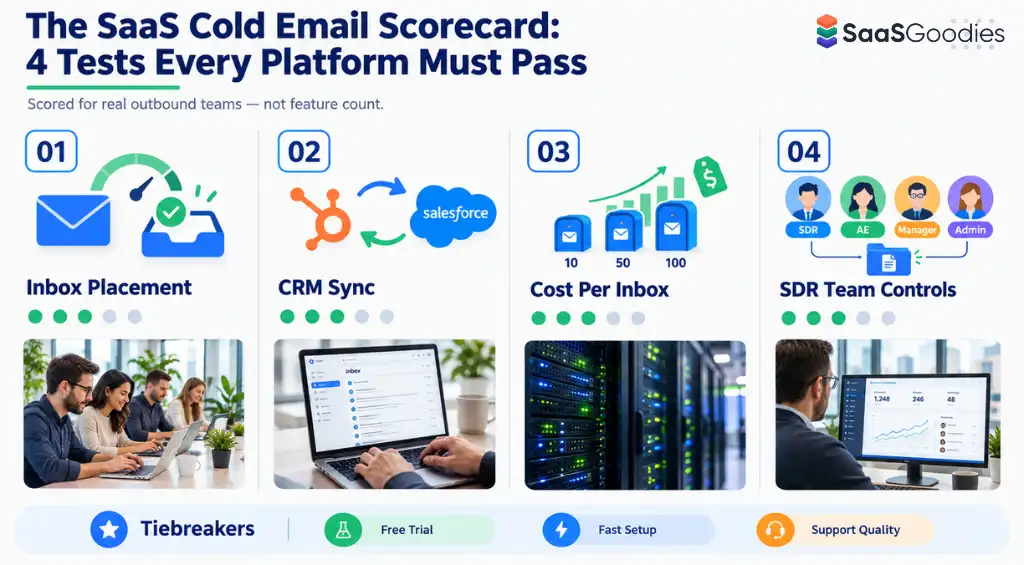
Each platform on this list was judged on how well it supports SaaS outbound, not on feature count alone. A SaaS team needs steady inbox placement, clean CRM data, and pricing that still makes sense as the team grows. Each tool was scored against four criteria:
Free trials, ease of setup, and support quality were used as tiebreakers when two tools scored closely.
Top 7 Cold Email Software Platforms Compared
| Cold Email Software | Hidden Technical Feature | Extra SaaS Outreach Edge |
|---|---|---|
| Apollo.io | Waterfall data enrichment | SOC 2, ISO 27001 certified |
| Instantly | Website visitor identification | ChatGPT-powered outbound control |
| Smartlead | Free verified lead credits | Drag-and-drop deal board |
| PlusVibe | Spam-trap list cleaning | Book meetings via mobile |
| lemlist | LinkedIn voice messages | Developer CLI access |
| Reply.io | Outbound from terminal | 10+ years in outreach |
| Mailshake | Lead Drivers dashboard | Vidyard video integratio |
1. Apollo.io
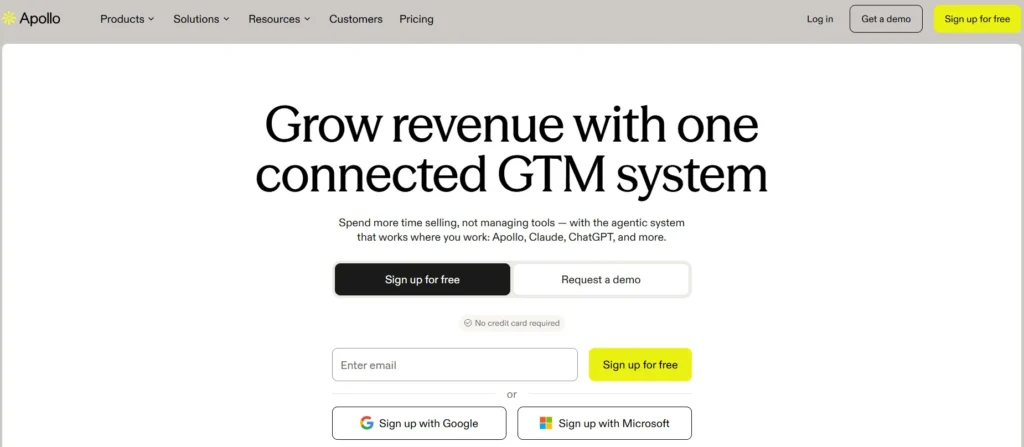
Apollo.io is a cold email platform that pairs outreach with a built-in B2B database. SaaS teams can search over 240 million contacts and 30 million accounts, then add prospects straight into email sequences.
Buying signals such as intent, job changes, and website visits help SDRs reach accounts at the right moment. AI agents trained on the team’s ICP can research leads, write outreach, follow up, and book meetings.
Domain warming, inbox rotation, and reputation monitoring protect deliverability, while 200+ integrations keep CRM data in sync.
Apollo also includes a parallel dialer and Chrome extension for multichannel SaaS outreach, and sign-up is free with no credit card.
Apollo.io Pros and Cons
- 240M+ contacts and 30M+ accounts built in.
- Buying signals flag intent, job changes, visits.
- AI agents research, write, and book meetings.
- Free sign-up, no credit card required.
- Less sending control than dedicated cold email tools.
- Credit-based limits can raise costs at scale.
Best For: SaaS sales teams that need prospect data and outreach in one place.
Rating
Why Choose Apollo.io? Apollo combines 240M+ contacts, buying signals, AI agents, and sequences, so SaaS teams can prospect and send without switching tools.
2. Instantly
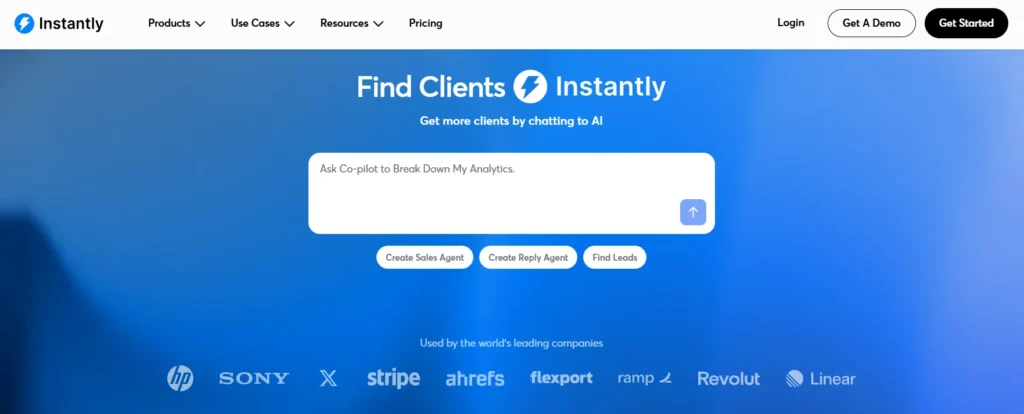
Instantly is a cold email platform built for SaaS teams that need to scale outbound without losing inbox placement. It combines sending, email warm-up, inbox placement testing, and email verification in one workspace.
Its Lead Finder gives SDRs access to a B2B lead database, while AI Sales Agents and the AI Reply Agent help write, personalize, and answer emails at scale.
AI Workflows route leads automatically when they visit the site, reply, or book a meeting. Revenue tracking goes beyond open rates, showing opportunities, pipeline, and conversions so weak campaigns can be paused automatically.
For SaaS outreach teams that want one tool for leads, sending, and replies, Instantly keeps the stack simple.
Instantly Pros and Cons
- Built-in warm-up and inbox placement testing included.
- Connect unlimited email accounts for inbox rotation.
- AI agents write and answer replies automatically.
- Revenue tracking shows pipeline, not vanity metrics.
- Lead database and CRM cost extra.
- Mainly email-focused, limited LinkedIn or calling steps.
Best For: SaaS SDR teams and founders scaling high-volume cold email across many inboxes.
Rating
Why Choose Instantly? Instantly puts warm-up, lead data, AI replies, and revenue tracking in one platform, so SaaS teams can scale outbound faster.
3. Smartlead
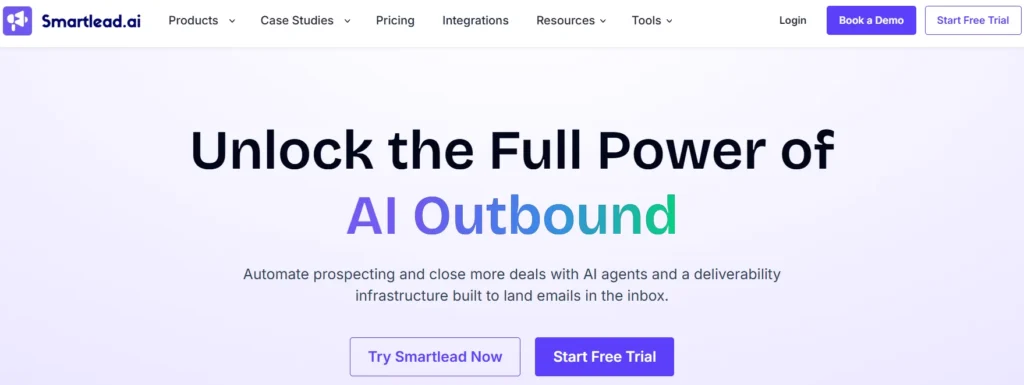
Smartlead gives SaaS outbound teams room to grow without per-mailbox fees. Teams can add unlimited email accounts and store unlimited leads, paying only for the volume they send.
Its SmartInfra engine runs on dedicated IPs and handles DNS records, warm-up, and sender rotation without manual work. Real-time monitoring watches bounce rates and spam flags, then adjusts sending before reputation drops.
Every reply lands in a unified Master Inbox, sorted by intent. An AI reply manager highlights hot prospects and pushes updates to the CRM.
Technical teams can also use the API, webhooks, or MCP commands through Claude and ChatGPT.
SaaS brands such as Vercel, Replit, and ClickUp are listed among its users, and newcomers get 50% off month one.
Smartlead Pros and Cons
- Unlimited mailboxes with no lead storage fees.
- Dedicated IPs shield sender reputation from others.
- Master Inbox sorts every reply by intent.
- Robust API, webhooks, and MCP for automation.
- Advanced settings take time for newcomers to learn.
- Done-for-you mailboxes and dialer add extra costs.
Best For: Growth-stage SaaS teams and agencies sending across dozens of mailboxes and domains.
Rating
Why Choose Smartlead? Smartlead pairs unlimited mailboxes with dedicated sending infrastructure, giving SaaS outbound teams more control over deliverability as monthly volume climbs.
4. PlusVibe
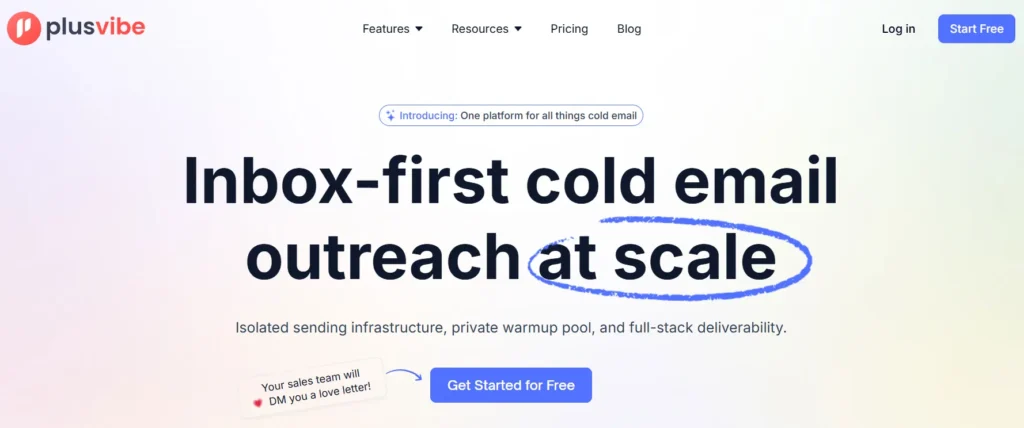
PlusVibe focuses on one question every SaaS sender cares about: will the email reach primary? Each customer gets isolated sending servers and connector IPs, never shared with other accounts.
Its private warm-up network uses AI-written conversations that open, reply, and mark messages as important. IP health is tracked live and rotated before damage spreads.
Prospecting tools scrape company websites, find work emails, verify lists, and push leads directly into campaigns without CSV uploads. OpenAI-powered icebreakers add context to each first line.
Replies from all connected Gmail, Outlook, or SMTP accounts are tagged by sentiment and urgency. Agencies can also order done-for-you private infrastructure, delivered within 24 hours.
A card-free 14-day trial lowers the risk of switching.
PlusVibe Pros and Cons
- Isolated servers and IPs for each customer.
- Private AI warm-up mimics genuine human conversations.
- Built-in scraping, email finder, and verification.
- Affordable pricing praised across user reviews.
- Smaller brand with a shorter track record.
- No native dialer or calling steps.
Best For: Deliverability-focused SaaS teams and agencies wanting private sending infrastructure on a budget.
Rating
Why Choose PlusVibe? PlusVibe protects domain health through isolated infrastructure and private warm-up, giving cost-conscious SaaS teams a primary-inbox focus without enterprise pricing.
5. lemlist
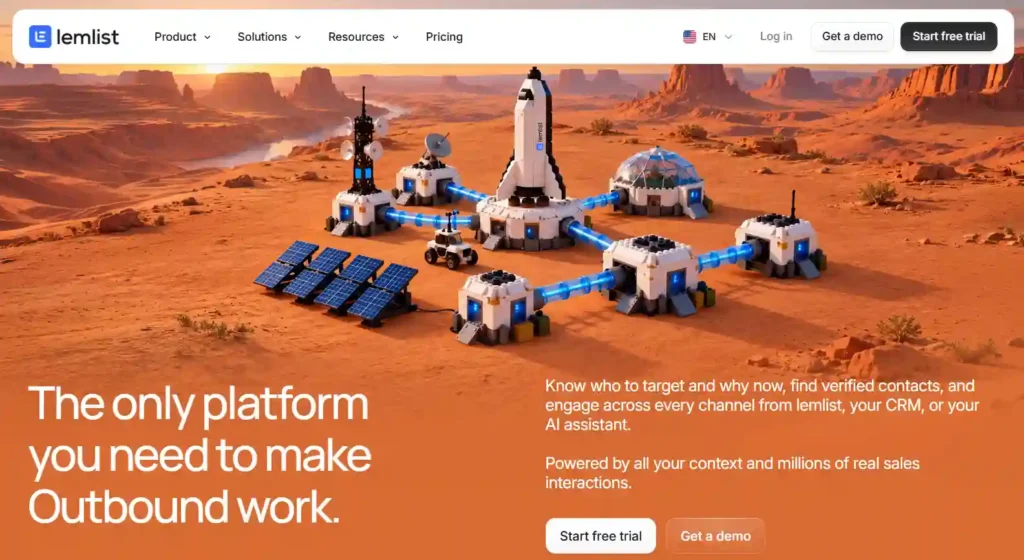
lemlist turns cold email into true multichannel prospecting. One campaign can mix email, LinkedIn steps, calls, WhatsApp, and SMS, so SaaS reps meet prospects wherever they respond.
Its 600M+ contact database, with an email and phone finder, fills gaps in CRM lists. Enrichment agents then gather context from LinkedIn profiles, company websites, and sales call recordings to sharpen every message.
Intent signal agents spot high-intent moments and suggest the right sequence to launch. The Deliverability Hub tracks mailbox and domain health, flagging problems early.
With 500+ integrations, including Salesforce, HubSpot, and Attio, data flows smoothly. ElevenLabs, Spendesk, and Pennylane all run outbound on lemlist.
Teams can start with a free trial.
Lemlist Pros and Cons
- Email, LinkedIn, calls, WhatsApp, SMS in one sequence.
- 600M+ contacts with email and phone finder.
- Rated 4.6/5 from 2,240+ G2 reviews.
- 500+ integrations, including Salesforce and HubSpot.
- Multichannel features sit on higher-priced plans.
- Building complex sequences takes extra setup time.
Best For: SaaS sales teams that want LinkedIn, calls, and email working together.
Rating
Why Choose lemlist? lemlist reaches prospects across five channels from a single campaign, helping SaaS reps book more conversations with personalized, context-rich outreach.
6. Reply.io
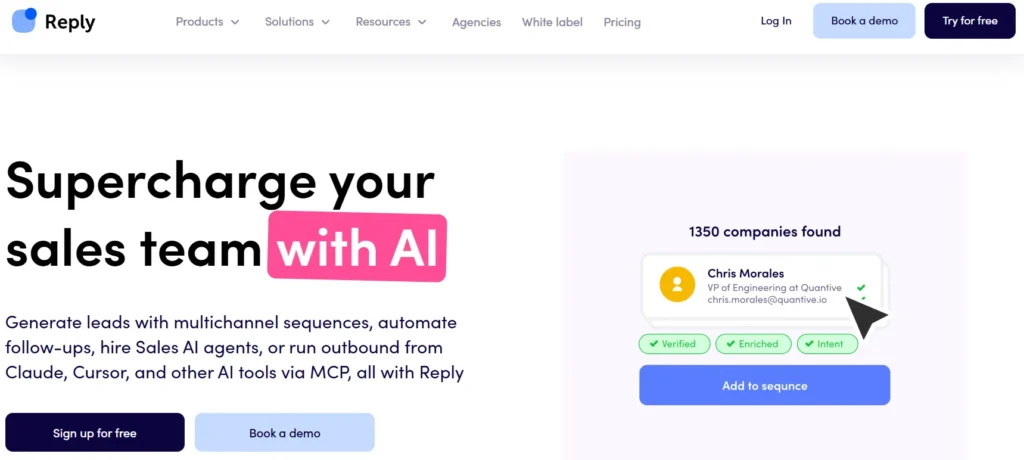
Reply.io lets SaaS teams decide how much of outbound to automate. Reps can run conditional sequences themselves, or hand prospecting to Jason AI SDR, which works around the clock.
Sequences adapt to prospect behavior across email, LinkedIn, WhatsApp, SMS, and calls. A built-in meeting scheduler syncs with Calendly and CRMs, turning positive replies into booked demos faster.
Setup is fast. Teams can buy Google or Microsoft mailboxes, even pre-warmed ones, while Reply handles SPF, DKIM, and DMARC records.
Its data layer covers over 1 billion contacts with intent signals. Multichannel plans start at $89 per user monthly, billed annually. Promo code SCARY15 currently cuts 15% off the Multichannel plan for a year.
Reply.io Pros and Cons
- Jason AI SDR prospects and replies 24/7.
- Buy pre-warmed mailboxes without leaving Reply.
- 1B+ contacts enriched with live intent data.
- Strong G2 score: 4.6/5, 1,480 reviews.
- LinkedIn and calling cost extra on Email plan.
- Jason AI SDR starts at $500 monthly.
Best For: SaaS teams wanting a mix of human led sequences and AI SDR automation.
Rating
Why Choose Reply.io? Reply.io gives SaaS teams the flexibility to switch between rep-driven sequences and a 24/7 AI SDR as pipeline goals change.
7. Mailshake
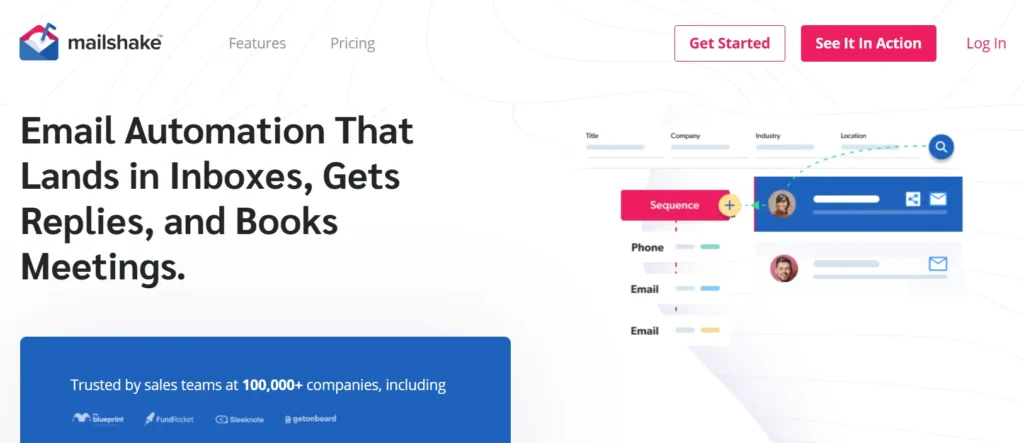
Mailshake keeps cold outreach approachable for SaaS teams that want results without heavy setup. Campaigns can launch in as little as five minutes, and plans begin at $29 per month.
SHAKEspeare AI drafts copy, rotates subject lines with Spintax, and runs A/B tests. Lead Catcher then surfaces the most engaged prospects so reps know who deserves attention first.
Before sending, a copy analyzer scans for spam words, while a domain setup assistant and free warm-up prepare new accounts.
The Sales Engagement plan adds a power dialer with unlimited North American minutes, plus native Salesforce, HubSpot, and Pipedrive connections.
Over 100,000 companies use Mailshake, and plans can be canceled anytime.
Mailshake Pros and Cons
- Affordable entry plan starting at $29 monthly.
- SHAKEspeare AI writes and A/B tests copy.
- Spam-word analyzer catches risky phrasing early.
- Power dialer adds calls to email sequences.
- No free trial; payment required up front.
- Starter plan caps sends at 1,500 monthly.
Best For: Small SaaS teams wanting simple email and calling outreach at low cost.
Rating
Why Choose Mailshake? Mailshake offers SaaS teams a low-cost, quick-to-launch outreach tool with AI copywriting, deliverability checks, and optional calling on higher tiers.
How to Match Cold Email Software to SaaS Team Size and Sales Motion
The right cold email software depends less on features and more on who sends, how much, and through which channels. A two-person founding team and a 20-rep SDR floor need very different setups. Use these matches as a starting point:
Sales motion matters too. Product-led SaaS teams should favor tools that react to signals such as site visits or trial sign-ups. Sales-led teams usually need deeper CRM sync and built-in calling.
Cold Email Compliance for SaaS Outreach: CAN-SPAM, GDPR and CASL
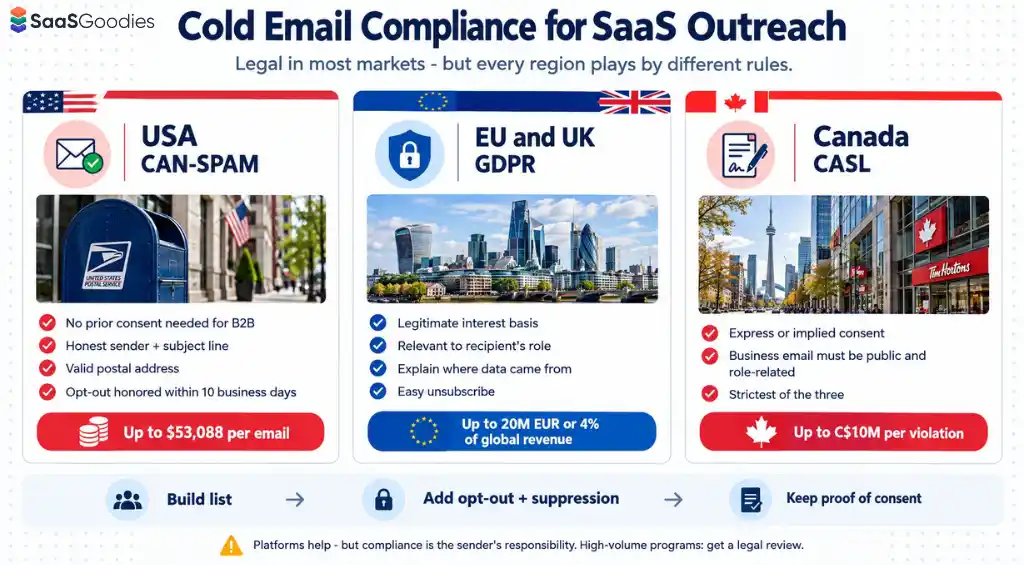
Cold email is legal in most markets, but each region sets its own rules. SaaS teams that sell globally should build compliance into every campaign from day one.
Many platforms on this list include unsubscribe links and suppression lists, but compliance remains the sender’s responsibility. For high-volume programs, a short review with legal counsel is worth the time.
Final Thoughts on Cold Email Software for SaaS Teams
No single platform wins for every team. Cold email software platforms for SaaS outreach teams differ most in the places that rarely show up on a feature page: how they protect sender reputation, how cleanly they sync with a CRM, and how pricing behaves as volume grows.
The safest path is usually the simplest one. Start with a trial, send a small campaign, and watch replies and inbox placement closely before scaling.
Good outreach still depends on relevance and patience. The right tool simply makes that work easier to repeat, one honest conversation at a time.